RECKLESS REBIRTH
METANOIA
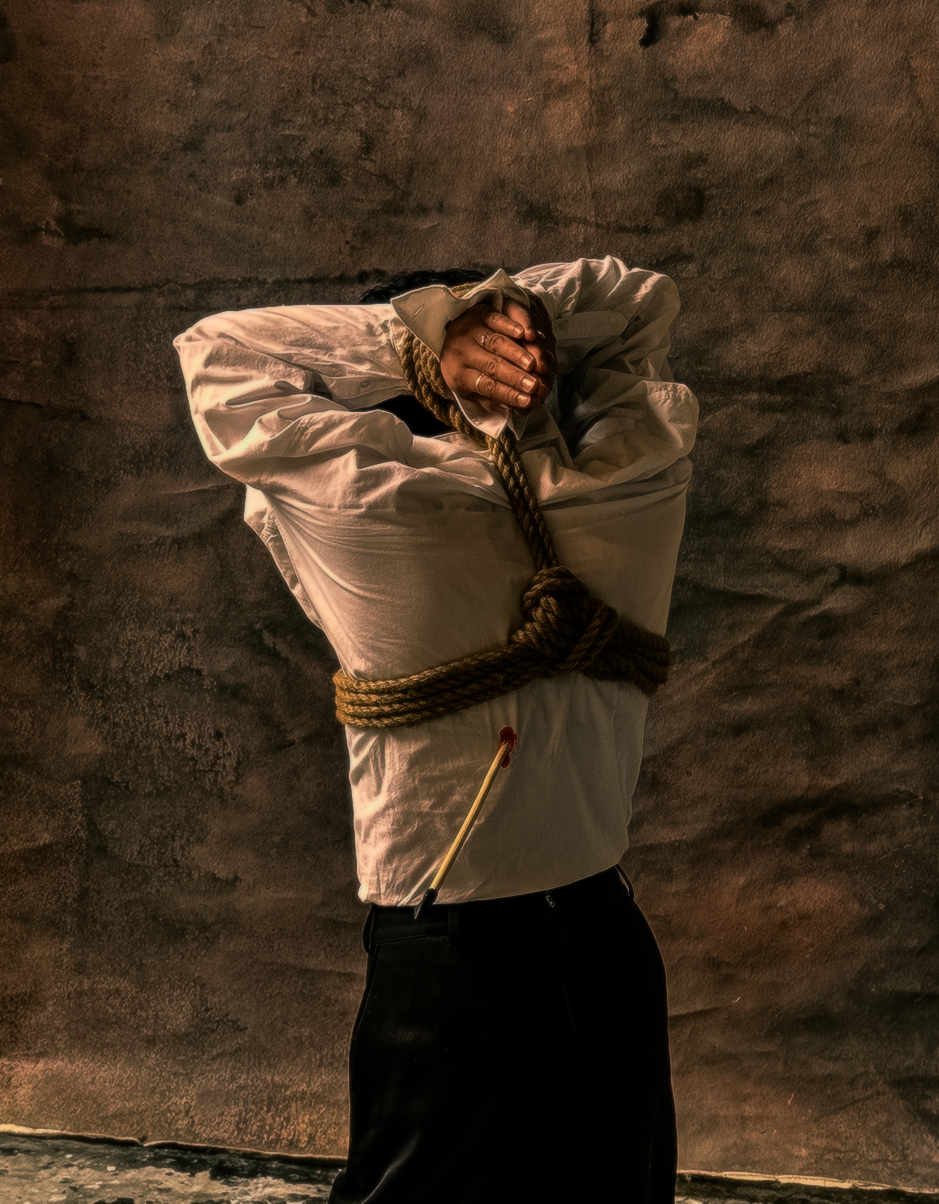
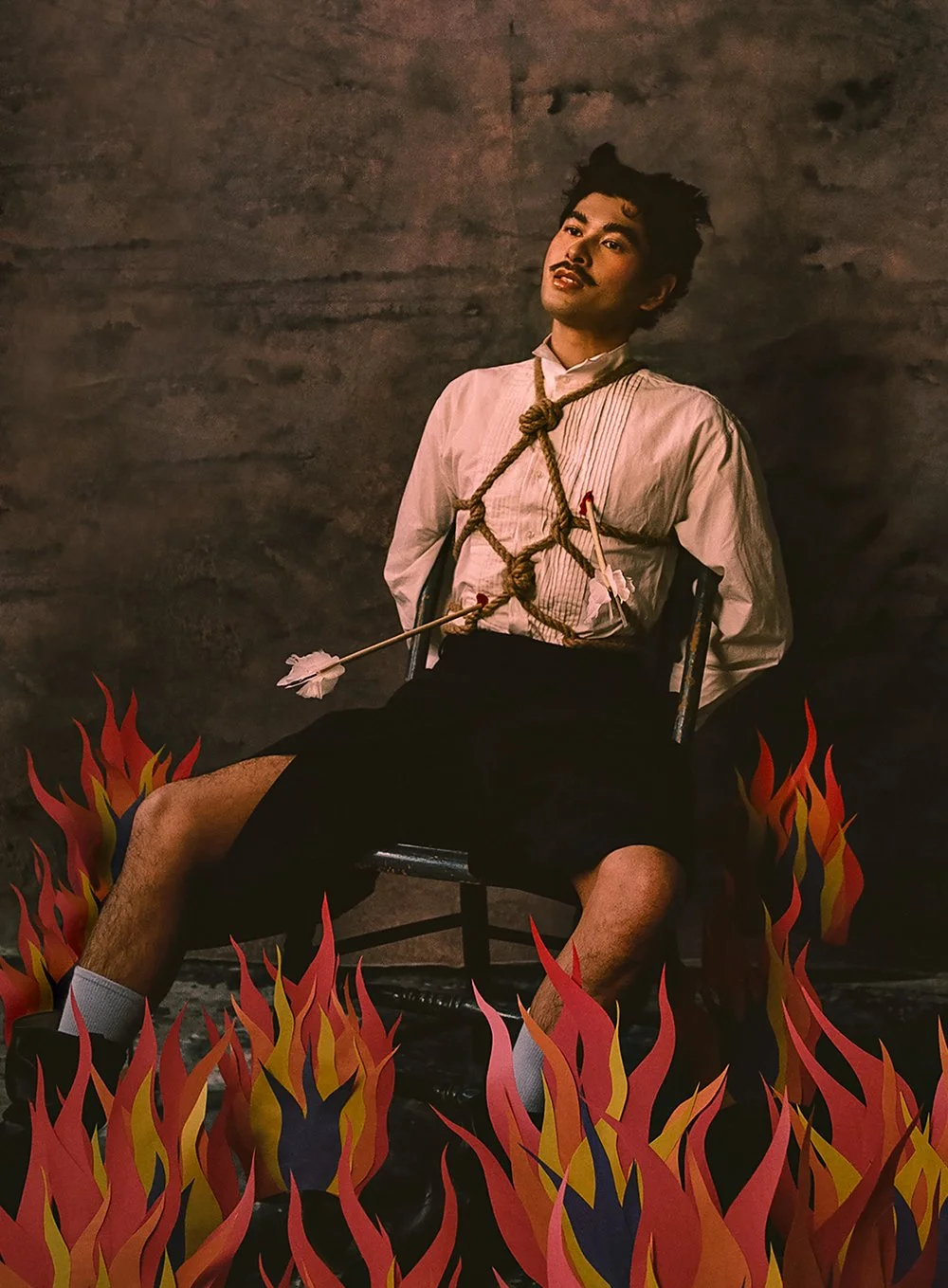
The change of mind arrives quickly, yet it lasts. Sudden, like the piercing of an arrow. This is the moment the old self can no longer survive intact. Metanoia marks a shift not only in opinion, but in perception as well. It appears when our awareness of love, life, and ourselves has collapsed, and the mind enters a state beyond what it once knew. From here, we move forward; all roads behind us close – and return is no longer tenable.
I would like to ask, what forms of yourself have you abandoned? Is Metanoia a rupture, or a refinement? If rebirth could be painted, what would be revealed?
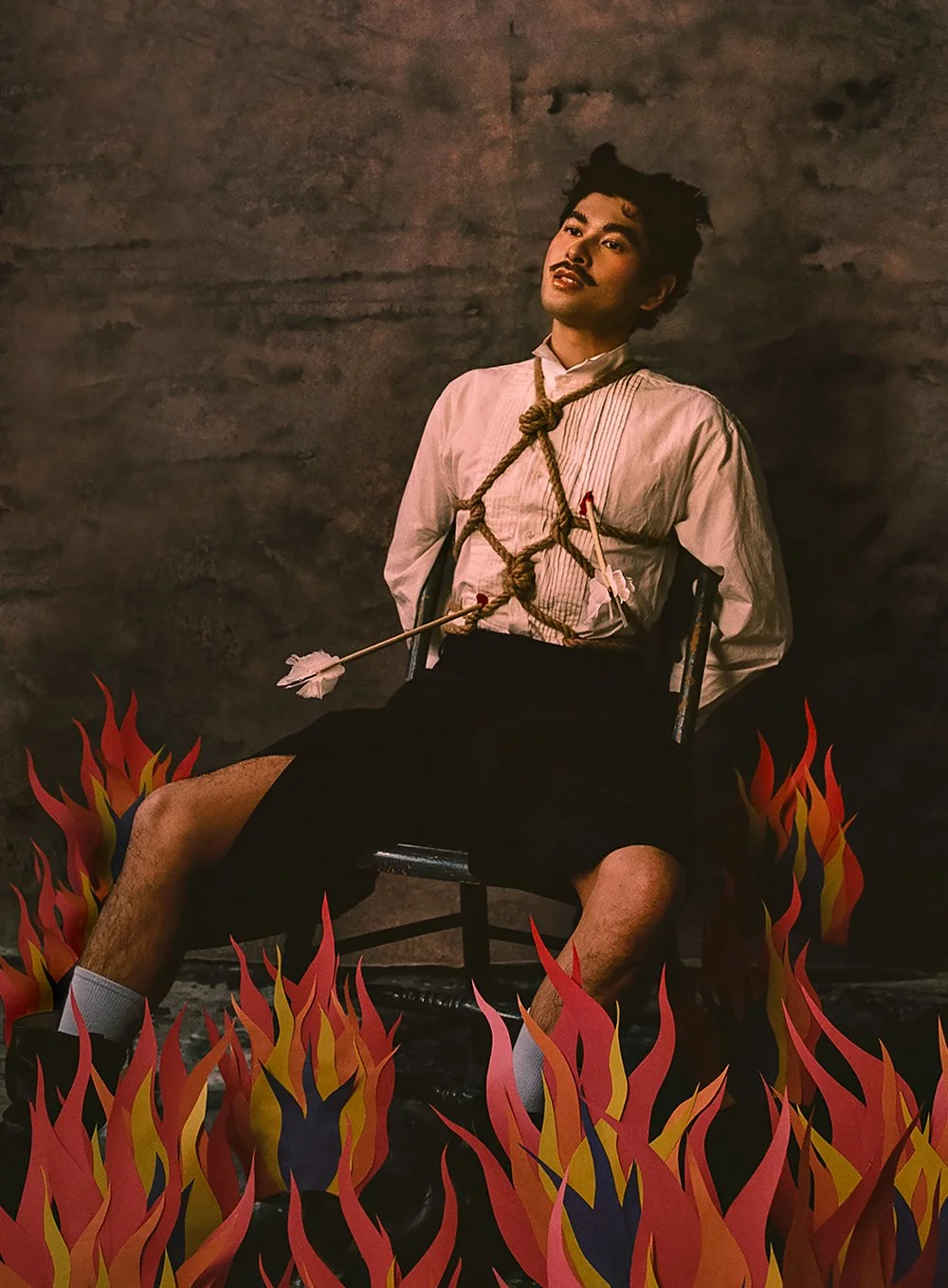
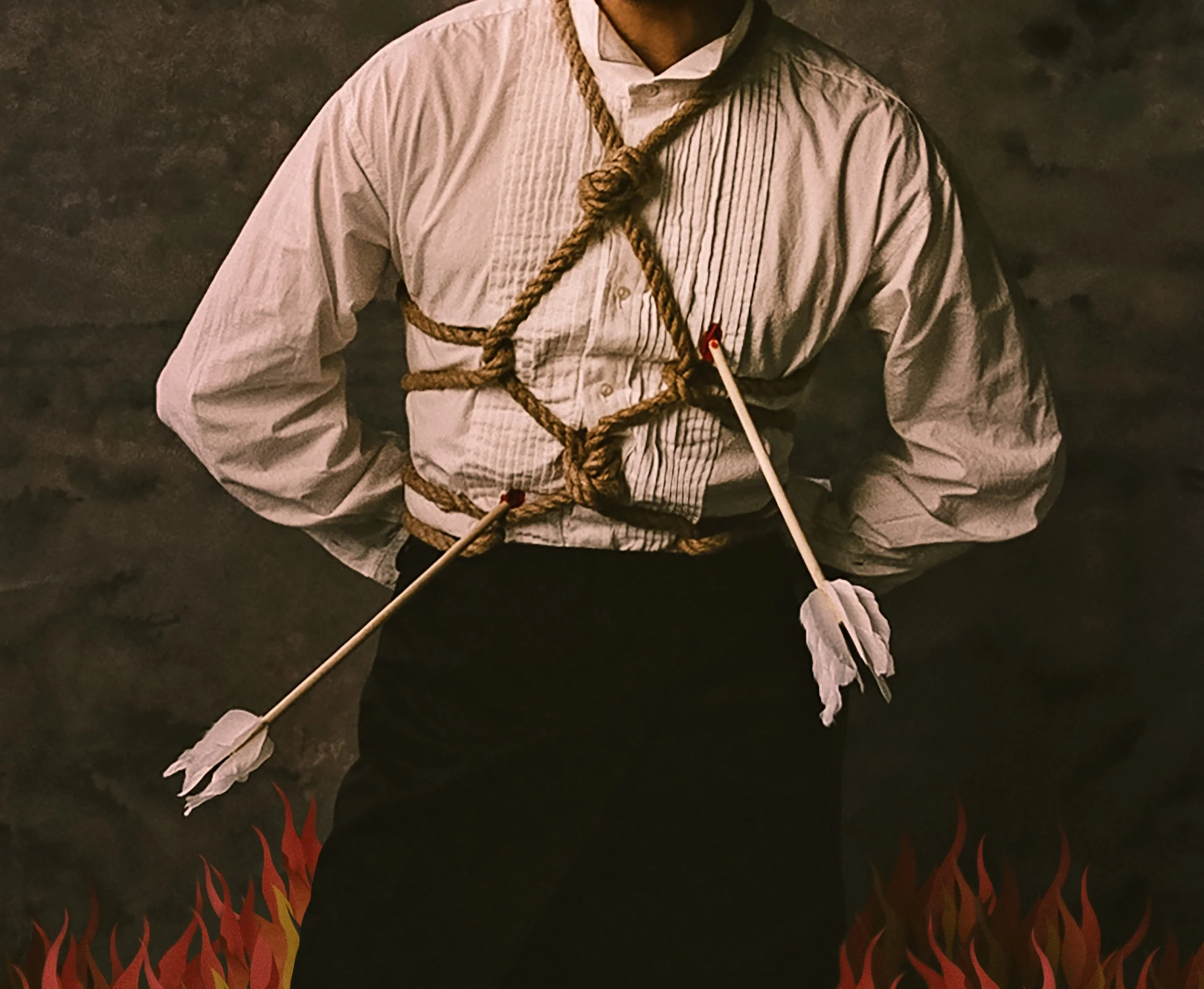
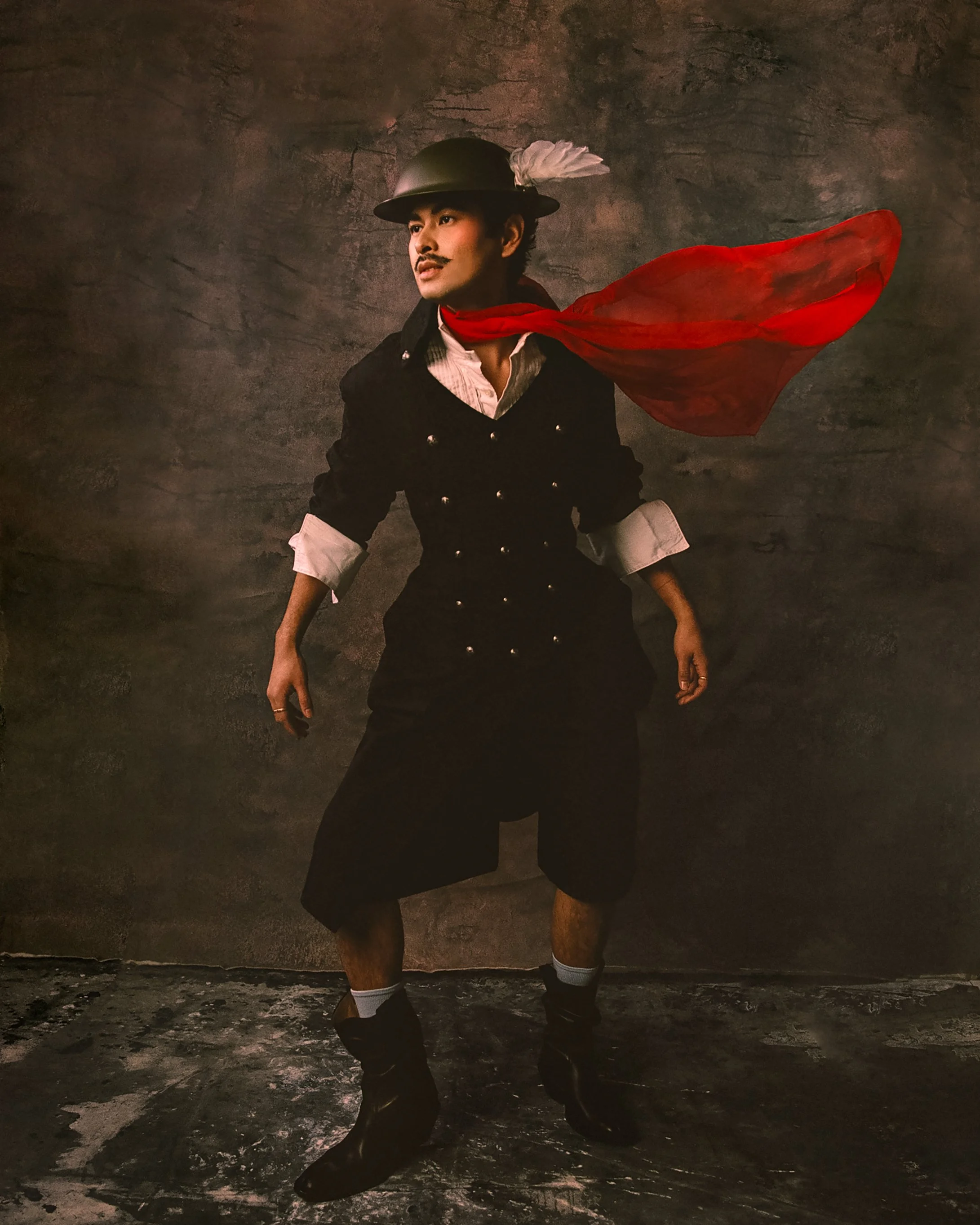
All imagery photographed by Falyn Huang.
It has been quite some time since the previous issue, so I see this as a revival. And what better way to celebrate that revival than with a focus on the idea of Metanoia — a transformation of the heart and mind? From the Greek meta — beyond, after — and nous — mind. Often, it arrives through pain, disillusionment, or intimacy — when a belief you once relied on breaks and, in breaking, teaches you something irreversible. Metanoia also keeps company with truth, sometimes in collaboration and other times in contrast. It lives in the space between collapse and clarity.
Our Naïve Writers
L.K. ODE
ELIZA WILSON
KAREN CANTOR
ANDREAS TOBIAS
KATE MORGAN
LYNSLEE MERCADO
FRAN
ALEXA LIM HAAS
AMBERLEY GRIDLEY
FRANCIS YU
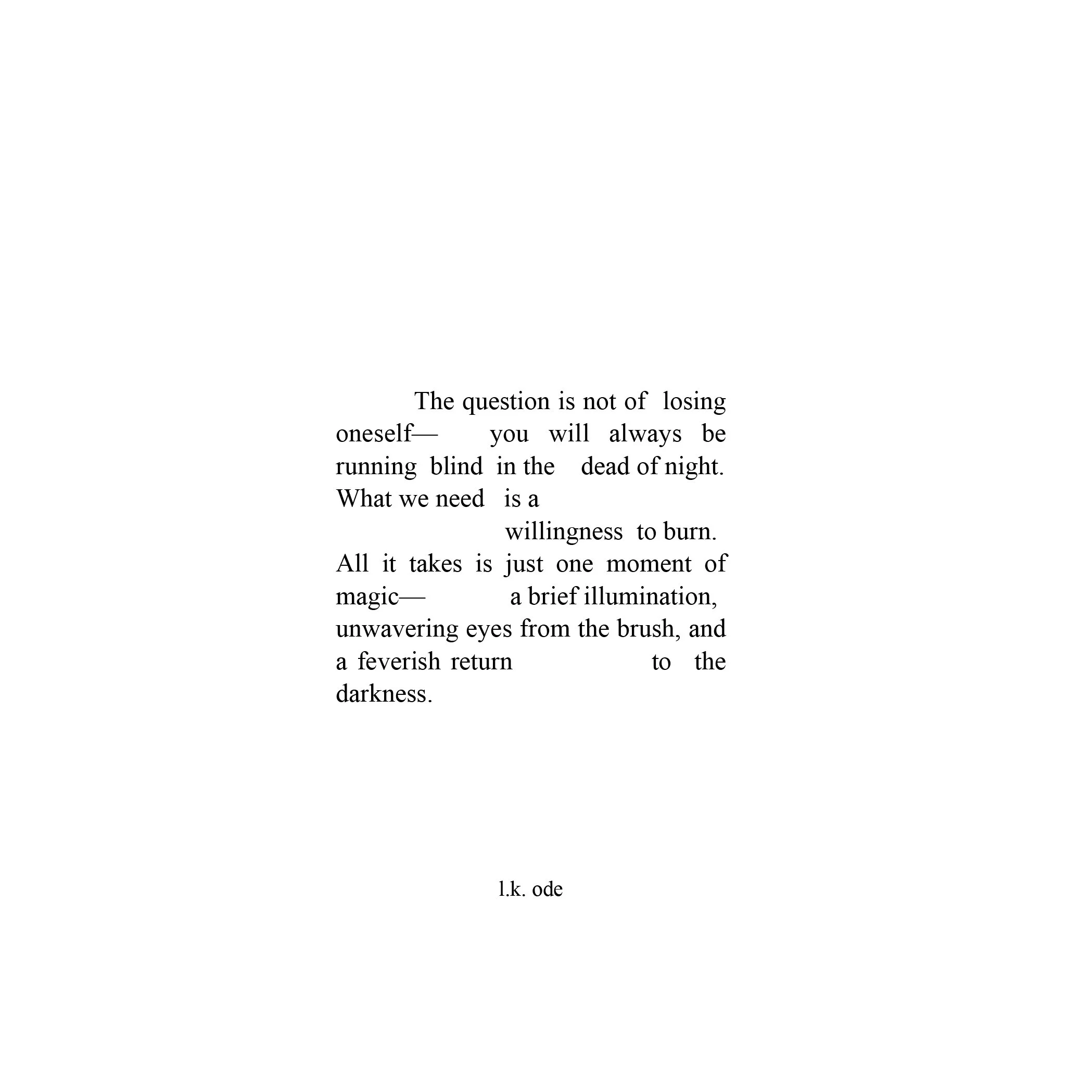
TIGER BLOOD
Written by L.K. Ode
The Ghost in the Garden
Written by Eliza Wilson
Falling in love is a sweet illusion. It convinces us we are signing up for a slow dance that will carry us effortlessly into the future. But love, in its purest form, is never just that. It is also the wreckage. True intimacy is a violent undoing. It does not tiptoe around our defenses; it dismantles them—the very walls we spent decades carefully constructing out of past hurts and carefully practiced self-reliance. It does not ask for permission. It simply arrives, and suddenly the structure we called "myself" begins to crumble. We are forced to sift through the rubble and confront the messy, fragmented pieces of who we really are—not the curated version we present to the world, but the sharp-edged shards and arrows we keep hidden. And there, in the vulnerability of that moment, we face the terrifying question: Are these pieces even worth reclaiming?
The answer, when we are lucky enough to find it held in the steady, unflinching gaze of the right person, is a revelation. Those pieces were never meant to be swept away and hidden in the dark corners of our soul. They were meant to be laid out in the open, every jagged edge exposed, and met not with horror, but with witness. They were meant to be seen, and in that seeing, accepted.
And this is precisely when the garden grows quiet enough for us to hear a familiar whisper. It is the ghost.
The ghost is the echo of every old wound, every betrayal that taught us to build those walls in the first place. It has haunted the perimeter of our garden for years, warning us away from this very moment. And now that we are here, vulnerable and exposed, it speaks loudest of all. It is the fear that grips us when we realize how much we have to lose. It is the voice that says, "You have been hurt before. Do not let this happen again."
But here is the transformation we create through life: we learn that the ghost is not an enemy to be banished from the garden. It is a guardian of the wound, a diagnostician of our deepest fears. Its presence does not mean the love is wrong; it means the love is real. To love deeply is to accept that you will be cut in two. To live authentically is to understand that the fear of that cut is not the opposite of wholeness—it is the other side of the very desire to be whole.
The slow dance, then, is not the whole song. The whole song includes the moments when the music stops, the floor clears, and we are left standing in the wreckage with our ghosts. And it is there, in the silence, that we make a choice: to gather our pieces, lay them in the open, and trust that we will be held.
To Celebrate an Unaccomplishment
Written by Karen Cantor
Covid-19 arrived in New York four years into my nursing career and exactly one month into my role as a full-fledged ICU nurse. At the time, I had a rock-solid five-year plan: survive five years at the only hospital I had ever worked at, secure my retirement benefits, and then apply to CRNA school. It was the kind of plan that sounded responsible—impressive, even—coming from your eldest daughter.
But somewhere between intubations, stimulus checks, and the 7pm applause, I had a change of heart. Because here’s the thing about five-year plans: they assume you’ll be the same person in five years. So, what happens when you’re not?
The strange thing about being an ICU nurse during a global pandemic is that the job eventually stopped feeling impossible. Somewhere between the third surge and the thousandth ventilator alarm, the chaos became routine. What once felt terrifying slowly became muscle memory. I could walk into a crashing room and know exactly what to do before anyone finished shouting the orders.
And that was its own kind of problem.
Because once the job got easier, there was nothing left to distract me from the rest of my life.
The truth is, I’m afraid to go back to school—not because I don’t think I could do it, but because I remember exactly what it took the first time. I don’t know how to be a student without losing myself in the process. Or my relationships. Or the fragile little ecosystem of peace I’ve built as an adult.
College, if I’m being honest, wasn’t exactly my golden era. Sure, I left with a bachelor’s degree and a few passport stamps, but not much else. No tight-knit friend group planning each other’s weddings. No lifelong best friend. My grades were decent, but nothing that made my parents’ faces light up across the dinner table.
My romantic life? Let’s just say traumatic might be the polite word.
And at my Catholic commuter school’s version of homecoming, I performed in an all-girl dance troupe called the Dolphin Dolls—often in booty shorts or fishnet tights. Yes, these were family events. And yes, somehow that made it worse.
Most nights I worked and slept in the library. I remember the surprise on people’s faces when I finally showed up to a party—and the quiet shame that followed when I realized they hadn’t expected me to come at all. After enough declined invitations, the hangout requests simply stopped.
And yet, if given a do-over, I probably would have involved myself socially even less. I had blinders on, secured by a strong desire for parental praise and an even stronger fear of failure.
Now, ten years into my career, I found myself strangely inspired by a TikTok video of a girl celebrating her un-accomplishments with a cigarette cake. It felt oddly appropriate.
Because somewhere along the way, my perfectly reasonable life plan had quietly collapsed.
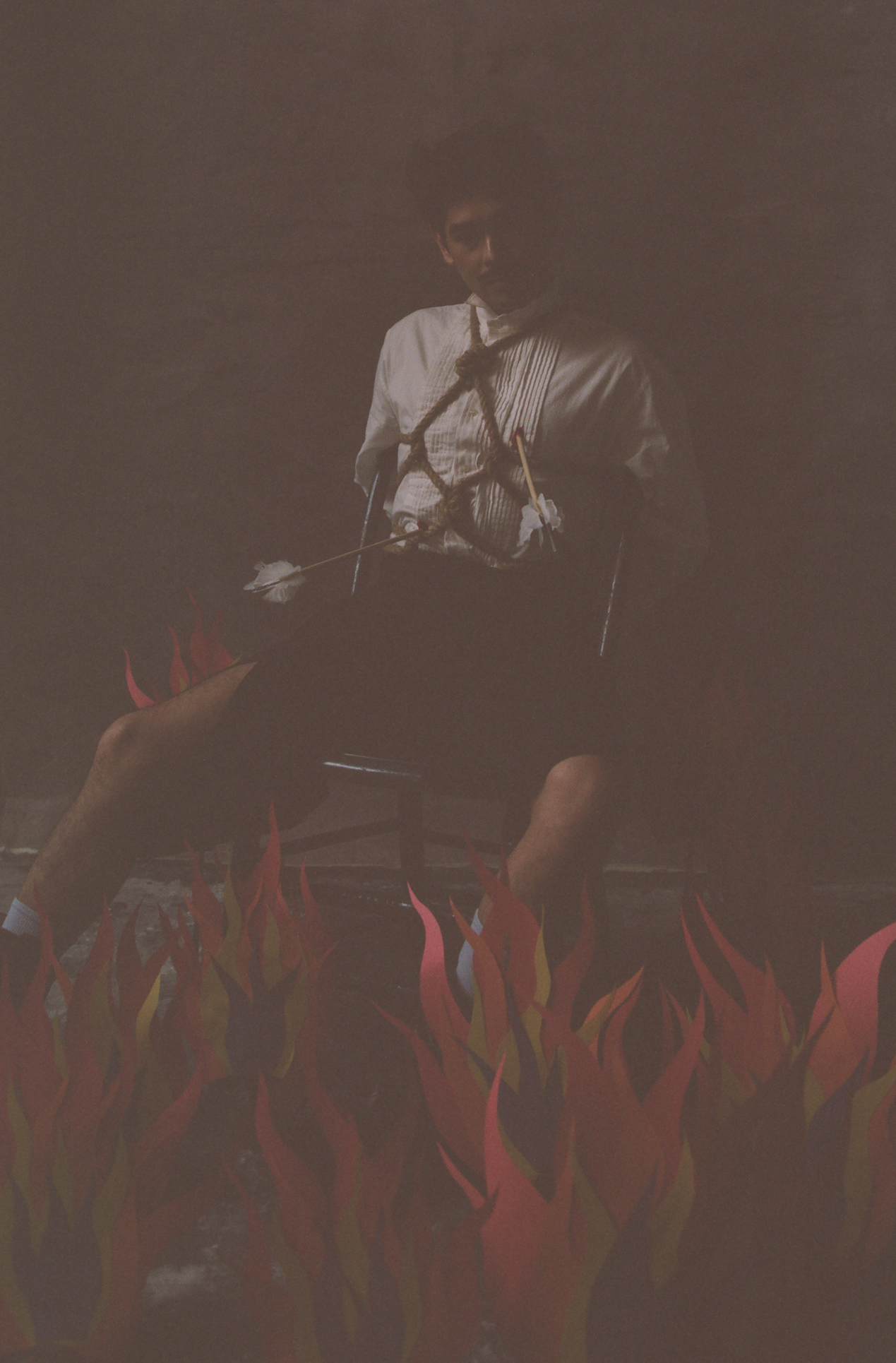
The road had once been clear. The timeline was reasonable. The itinerary was strict. The goalposts had never moved. But a couple of failed standardized exams, a phobia of driving, a global pandemic, and one broken engagement later, the entire structure had no leg to stand on.
Which raised an uncomfortable question: who the hell was I?
By the time my frontal lobe finally finished developing, the entire world had shut down. And suddenly my instinct-driven way of living—react first, think later—was painfully obvious. I realized I had no tools in the toolbox. Just adrenaline and determination.
Meanwhile, Instagram kept serving me a parade of weddings, baby showers, new houses, and shiny cars. And I couldn’t help but wonder: was everyone else moving forward while I was standing still?
By twenty-eight, I felt completely lost. Unbroken behavioral cycles turned into emotional spirals that began manifesting elsewhere: on my skin, in my joints, across my shoulders, even in my bloodwork.
With the help of my therapist, a little Welly-B, and a stimulant prescription, I decided to give the plan another shot. I enrolled in an online biochemistry prerequisite course and took my flashcards to a coffee shop like some kind of academic redemption tour.
But somewhere between the flashcards and the oat-milk latte, it hit me.
No amount of romanticizing could make studying enjoyable again.
Was it always this hard? Or had I simply outgrown the version of myself who believed suffering was proof you were doing something right?
I got through every year of life that was covered by my father’s insurance plan in the way he would have endorsed it: sheer willpower, discipline, sacrifice—and absolutely zero medication.
My CRNA application sat half-finished on a shelf collecting dust. Deadlines passed year by year. At first, I thought this meant I had lost my ambition.
But what really happened was much stranger.
For the first time, I started considering… me.
I had spent my entire adult life proving that I could endure hard things—nursing school, ICU shifts, a global pandemic—only to discover that the skill I had mastered was endurance itself.
The irony was that by the time the ICU finally became manageable—by the time I could walk into work without my heart rate skyrocketing—I had also developed enough self-awareness to realize I didn’t want a life built entirely around surviving difficult things.
And that realization arrived, oddly enough, after running 26.2 miles through New York City. At some point during the marathon, I remember thinking: when was the last time I genuinely enjoyed the process of something?
What if my life wasn’t designed around proving something to someone else? What if it was designed around what I actually liked every step along the way?
I realized I couldn’t go back to a grind I had to dissociate from just to survive. My dream job had suddenly become my nightmare job and, in the end, just a job.
Who was I outside of a school or a hospital?
After years of mastering survival mode, I didn’t want another mountain to climb. I wanted the beach.
Because if I’m being brutally honest, I never had a good answer for the application essay question: Why do you want to become a CRNA?
The real answer was simple. My mom strongly suggested it. And it pays well enough to tolerate being blamed by a surgeon for every small inconvenience in the operating room.
The longer it took me to approach the application, the less compelling it sounded—to go into debt and sacrifice three more years of my life, and my introverted social life, to prove something I wasn’t even sure I wanted.
The past version of me would have written a beautiful lie. I would have stretched and embellished my truth until it looked impressive enough.
But the version of me standing here now can’t do that anymore.
Because the truth is, I can barely focus on something I don’t care about for more than twenty minutes. And yet I can surf for four hours straight, risking sunburn and drowning. I can knit an entire sweater in one sitting.
And despite these hyper-independent hobbies, I can’t imagine spending any less time with a man I met after all the drama—who only knows the past version of me in the past tense.
Which makes me wonder.
In a city obsessed with ambition, prestige, and the next big credential… Is choosing the life you actually enjoy the boldest career move of all?
Love in Layers
Written by Andreas Tobias
Raveling
Written by Kate Morgan
He dreamt that he woke her with his palm on the back of her neck.
“Darling,” he said, and the sheets rustled. Her face slumped deeper into the space between the pillows. He whispered again – her name this time. The sun climbed above the garden hedges outside the window, and the light slipped down the headboard towards her braid.
When he opened his eyes, the room was dark, and he was alone in their bed. He reached a hand to the other side of the mattress. The cotton was cool like deep water. He rose slow. He was not usually the last to wake.
He found her in an armchair in the sitting room with the curtains half-drawn. She was still wrapped in her linen dressing gown. Her eyes were closed, and the flesh under them was sunken in as if a potter had pressed his thumbs into a pale, wet clay. Her braid must’ve come undone in the night. Nimbly, her fingers toyed with the air, some ghost of an instrument or an unseen rosary. He stepped closer, and a strand of her hair glinted colorlessly in dead space. She raveled and unraveled it around her first finger in constant motion. He was long past the point of understanding.
When, over breakfast one day last winter, she mentioned that they should buy a bottle of wine for the neighbors who’d just had a second baby – this for the third time since she’d consulted him on the price, bought the bottle, and dropped it off in a gift bag – there was no feeling he knew like it. Sixty-two, he’d thought to himself, sixty-two and still he was given new, hateful problems to bear, each more perplexing than the last. His own mother had been tack-sharp and worked with her hands until the day she dropped. His wife, it seemed, would not be so lucky. He hummed his agreement about the gift and asked for another pot of coffee.
She rose to make it, and he watched her with a long-forgotten intensity. With her eyes cast down to the stovetop, her hair pulled back, and a forehead like wicker, it amazed him that this could be the young woman he married. She had been young, quite young. A girl, really. Growing up, his friend’s father kept horses and trained them so well that by their first year, he could walk them without a lead. They stayed level with his shoulder with ears tipped in his direction, walked in their nodding way, and stopped when he stopped like they believed he was yoked to them. That’s what it had felt like when he’d brought her home, in an off-white dress his mother had altered, and made a wife of her. He broke the horse before it knew it was broken.
She set the full pot of coffee on the table, and he tucked away his reflections.
Now, he was listening to the radio – bluegrass, low enough to not offend him. He drowsed on the sofa in a spot of early summer sun. Two hands held the glass of red in his lap in case he nodded off too far. She burst into the house in her gardening clothes with a half-cry of agitation. It was the neighborhood kids; she couldn’t think of what else it could be. What else would leave the chicken coop empty of eggs without taking a few hens with it? Her girls were good layers, all fourteen of them. Not an egg in sight – someone must’ve swiped them. Needless, really. They could’ve only asked.
His brain worked slow, sleepy, but it worked. It rose to something. Behind her, on the counter, a wicker bowl was piled high with powder blue, white, and tawny eggs.
“Darling,” he cut in. “I brought them in this morning.”
She stopped in the doorway, hands outstretched, like she was hung from the lintel. He watched the struggle in her mind – what she knew of him to be good waged against what she knew of him to be true. Outside, the young tomato plants that had started the day sagging under small green fruit were now straightened and fixed to tall bamboo poles. She turned and looked at the bowl. The stubborn knot of her brow loosened by degrees. Today was no different than any other; and yet entirely.
From the couch, he watched her move towards the kitchen. She lifted a hand to her mouth, framed with wrinkles and no bigger than a coin slot, then the bridge of her nose. Her grey hairs, gathered in a braid, were nearly as vivid as the pale blonde she had been as a girl. An hour or so later, when he had an apology and a fresh quiche for his efforts, he thought that he must be the most useful husband never to rise to his feet. His future little generosities were many and mindless, he was sure. He closed his eyes and felt that the sun only drew up his warmth from within. He dialed up the volume of the radio; the singing from the stove went quiet.
La Chaleur
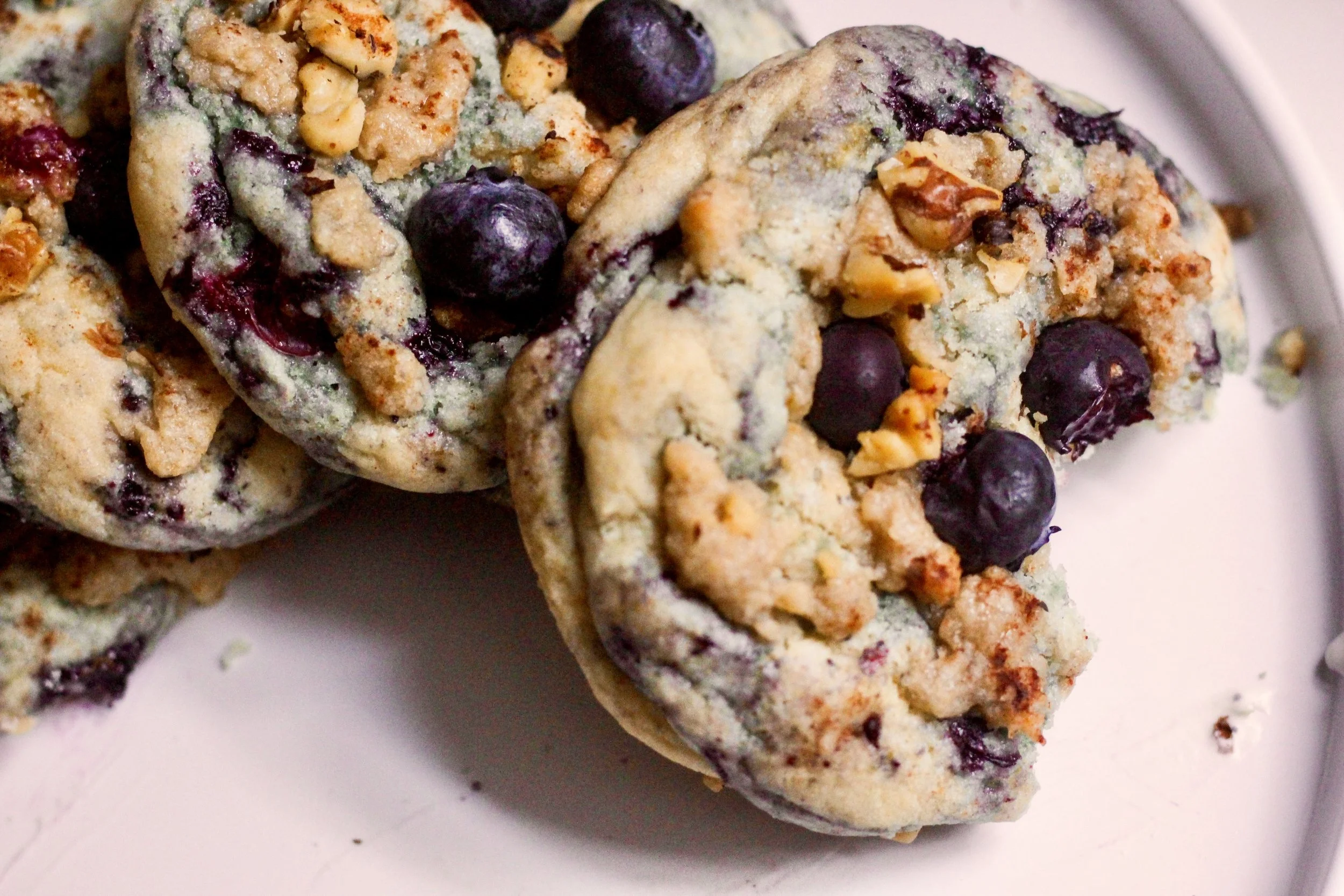
Blueberry Banana Crumble Cookies
Written by Lynslee Mercardo
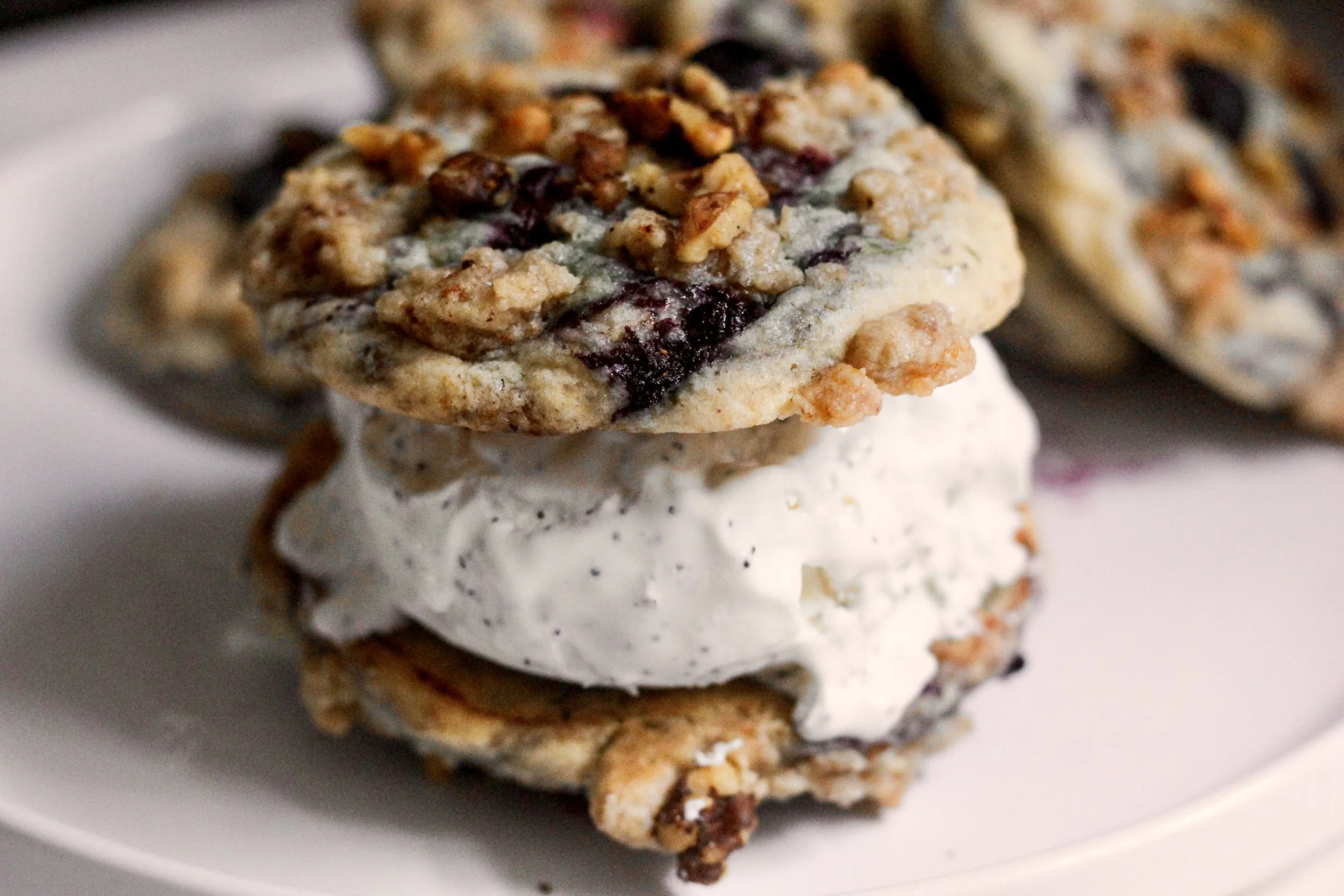
When I heard Maurice was leaving for San Francisco in 2015, I wondered what would be a good parting gift. I had always been fond of baking for any occasion and that was where my mind settled on; I was going to bake him a goodbye present. Were the overly ripe bananas staring at me on the counter my signal to make these or had he requested them from me specifically? I can't remember. All I know is that he's loved them ever since that fateful day I had gifted them, having his first bites on his way to San Francisco with tears streaming down his face.
To anyone else, a blueberry banana muffin is a homely baked good but nothing to write home about. It's something you make when bananas are in their final days - an afterthought that can be elevated with nuts or berries if you have them on hand. It's a comforting transformation of everyday ingredients that is filling, easy to make, and palatable. To Maurice and I, however, a blueberry banana muffin is a sign of friendship and nostalgia. For me, making these meant that I was either about to greet him once more or we're parting ways for a moment. It is the first recipe in my recipe book, because I've baked them with love and confidence for him on multiple occasions.
Since 2015, we've lived in different countries, lived together, found love, lost love, found ourselves, and much, much more. In my reflection of how we've grown and elevated, I've created a refined version of those blueberry banana muffins in the form of a cookie. It is an homage to the roots of our friendship in our hometown north of San Diego, and how much we've changed and grown together in big cities and beyond. I incorporated the nostalgic flavors and textures of a blueberry banana muffin top into a gourmet cookie that can be enjoyed as a cookie ice cream sandwich or with a tall glass of milk. What makes it special is the chia blueberry lemon jam that brings a zing of freshness as well as the banana crumble that tops each cookie. These flavors sit beautifully together and could perhaps create a special memory for you & yours as well, depending on the occasion in which it is shared. Enjoy x!
Lynslee
Ingredients
Blueberry Chia Jam
2 cups frozen blueberries
¼ cup honey
¼ cup sugar
1 lemon juiced
2 tablespoons chia seed
Banana Crumble Topping
¼ of a ripe banana mashed
1 teaspoon of banana extract
3 tablespoons butter, softened to room temperature
2 tablespoons brown sugar
2 tablespoons granulated sugar
2 tablespoons crushed walnuts
½ cup of flour
pinch of salt
Dough
½ cup of butter, softened to room temperature
¾ cup granulated sugar
1 egg, room temperature
2 teaspoons vanilla extract or paste
1 ¾ cup flour
1 tablespoon milk
½ teaspoon salt
¾ teaspoon baking powder
¼ teaspoon baking soda
¾ cup fresh blueberries (divided)
4 tablespoons of Blueberry Chia Jam
Instructions
Blueberry Chia Jam
1. In a saucepan, combine blueberries, honey, sugar, and lemon juice over medium heat.
2. Stir for 10 minutes until juices are released, then mash blueberries and bring to a simmer
on medium low heat for another 10 minutes.
3. Once slightly thickened, turn off the heat and stir in chia seeds.
4. Transfer to a jar and cool to room temperature.
Banana Crumble Topping
1. Mash banana and butter until it forms a paste.
2. Add banana extract and incorporate well.
3. Mix in sugars, flour, salt, and walnuts.
4. If mixture is not 'crumbly' at this stage, add another tablespoon of flour.
5. Set in refrigerator while you make the cookie dough.
Dough
1. Preheat oven to 350°F
2. Beat together butter and sugar until fluffy.
3. Add egg and vanilla and mix until incorporated fully.
4. Add flour, baking powder, baking soda, salt, and milk and mix just until combined.
5. Gently fold in 1/2 cup of fresh blueberries.
6. Add each tablespoon of jam dolloped across the dough and fold. Note: do not over mix, we want ribbons of jam!
7. Form into 8 balls of dough (roughly around 2-3 tablespoons large).
8. Top each ball with about a teaspoon or so of the refrigerated banana crumble topping.
9. Bake on parchment lined cookie sheet for 18-20 min or until crumble topping is brown on the edges.
10. Once baked, push in 2-3 extra blueberries atop each cookie.
Abby’s Tale
Written by Fran
There is no God.
…
He sits in an empty room, rapidly bouncing his leg up and down, facing the ground. Any minute now, they’ll call his name, and he’ll take the stage for the first time in his life. But for now, he sits in an empty room, stuck in the moment in between.
A bead of water falls onto his hand.
Is there a leak in here? No, it’s June in Tempe, Arizona. There’s hardly any water to begin with. He raises his hand to his forehead, but can’t find the sweat he was hoping for. His fingers make their way down to his eyes. I guess that means I’m crying.
Another piece of confirmation hits his hand. Now he takes action, wiping away the evidence as he gets up, looking for something he knows he won’t find in an empty room.
He makes eye contact with himself in the vanity across the room. Wrinkled shirt, red eyes, a haircut that wasn’t flowing like that barber promised him it would.
He approaches himself, breathing heavily, grasping the furniture in front of him, hoping it will keep him afloat.
Why did I think I could do this? I’m nobody, they’re gonna chase me off the stage. Please, dear God, hel–
He catches himself. The pressure in his chest eases.
That’s right, I almost forgot. There is no God.
If there was one, I wouldn’t be in this empty room right now.
I’d be with her. The lone bright spot of my increasingly average life.
We’d be dancing in the living room, our dirty dishes on the table, unwashed, the sweet smell of that lavender candle she loved so much gracing the air.
She would have been electric, just like she was before the cancer. She would’ve gotten better. She was supposed to be one of those inspirational stories you see on Facebook, beating the odds and giving hope to couples all around the world that they could too.
I would still be at that job I hated, surrounded by people I loathed, doing work that felt like driving a nail through my skull and back out my ass.
But it would’ve been ok. I could’ve spent my entire life doing that if it meant I got to still come to her every day. I didn’t need my own dreams when I could be a part of hers.
He continues facing himself, his breath slowing, his eyes drying.
There was no one listening to my cries for help. There was nobody who created this world for her and me. I was just lucky enough for her to have crash-landed into my life.
He finds himself smiling now. Reliving the pain of her end also comes with the familiar scent of lavender and a warmth stoked by nights filled with anime and cheap pasta.
If only she could see me now. She wouldn’t believe what I was about to do, much less believe that I quit that stupid job, left our hometown, and got this stupid-ass haircut.
Laughter leaves his throat.
She’d be so happy. I didn’t get stuck wishing for a life that wouldn’t return. I stepped into my own shoes and walked my own path.
There is no God, there’s only me and a bucket full of chances. And I don’t intend to waste any of them. For her. For myself.
“Hey buddy, you’re up!” He turns around to find the show runner motioning him to the stage.
He gives himself one last look and does her signature wink. He lets go of the moment and walks toward a room that isn’t empty at all.
Bloodline
Written by Alexa Lim Haas
Metanoia
Written by Amberley Gridley
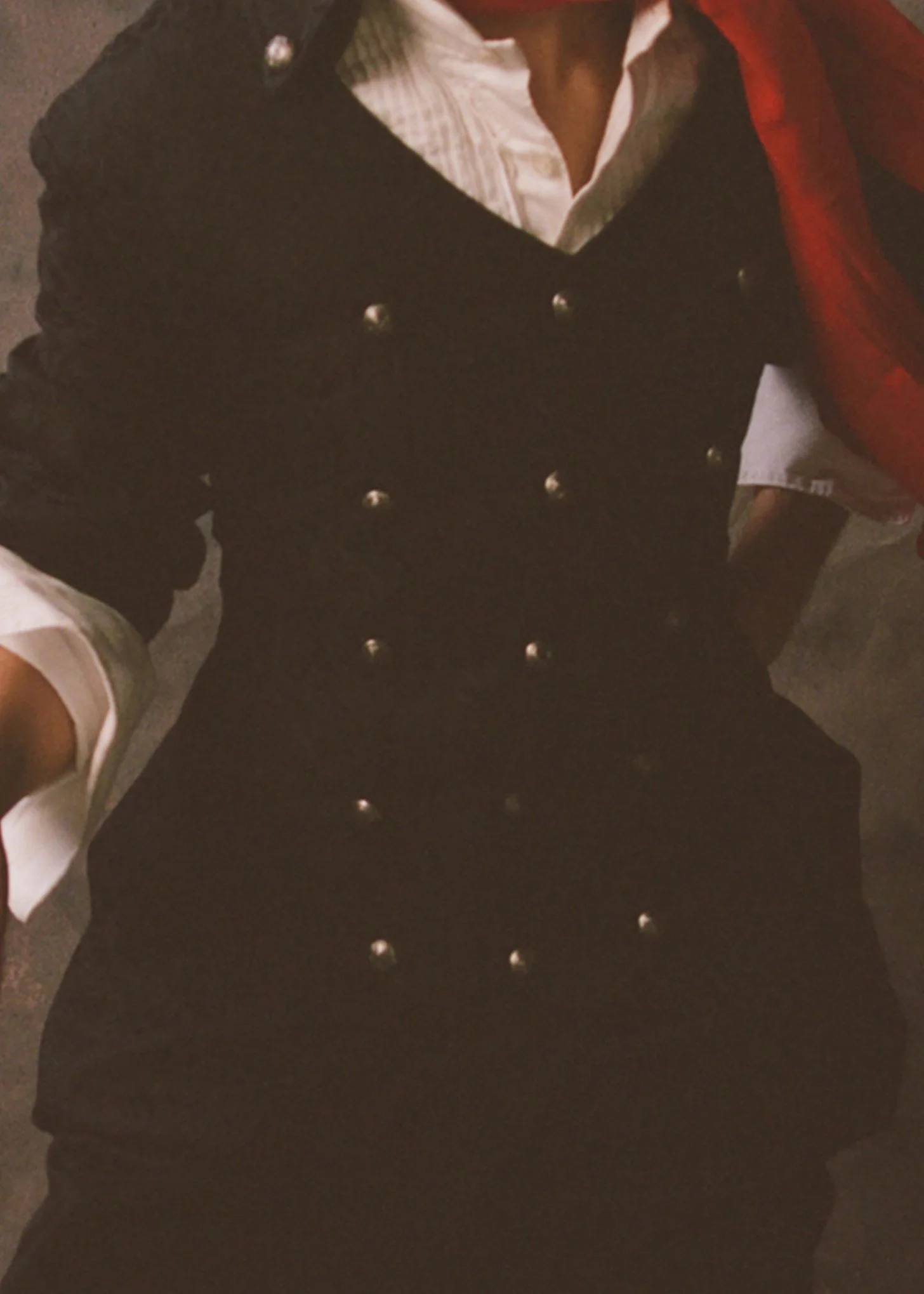
I have begun to say that I paid for this life with a pound of flesh. This new, changed version of myself, but in truth I paid for it with much more. To truly understand I have to breathe life back into who I was before this penitence.
Reinvention has never been a new concept to me, this however, was something far more holy than a change in aesthetic. This would involve me laying myself bare, with no other choice but to make it through to something completely anew.
The person who sat on that train looking out from behind the shadow of God was optimistic, scared, fragile and full of false hope. This was someone who said yes to everything and everyone who wanted something of them or from them. Someone who was so resolved in an ending that was far from the now.
This person was mistaken.
In the months and years that followed, every ounce of myself was wiped clean. My waist long hair and all the memories it held fell to the ground like leaves waiting for the fall. Every tear I had kept damned poured out of me in waves. I got used to retreating into my inner most self to get through pokes and prods on my fleshy exterior. All the while, watching the people whom I thought would hold me the tightest, let me slip through their fingers without pause.
Moments of grief, of rapid change of unexplainable uncertainty create a new outlook. A tilted perspective that you cannot emulate. As my body began to heal and the stitches stressed to secure my psyche, no longer needed. I began a new life.
For a moment I pleaded with myself to return to that person on the train. Missing the hope, even if it was false. Seeking the fear because at least that fear was faceless. Wanting the fragility because I had become so calloused.
Metanoia, in its entirety, everything was, is, different. The conversations I had with myself became weighted in gentleness, to make up for the heavy handed actions my body withstood. I held myself close knowing I could never fall through my own fingers. Fear has become more of a friend, a familiar face I seek in the crowd to reassure me that I have seen worse.
I have used my blood as the ink, my flesh as the canvas and my resilience as the mirror. We paint ourselves anew with every breath, every day as we reflect on what we once were just a seconds ago. So in all my truth this life was exchanged for so much more than just flesh. A baptism of mind, body and soul, a rebirth, seldomly welcomed but never forgotten.
Fool’s Gravity
Written by Francis Yu
We’re bound the way that spring follows winter.
What might it mean, this change of direction?
I find it impossible to capture what change brings. Maybe it’s that in trying to define or give shape to the direction, any direction, we start the cascading effect of trying to grasp at control. Control is a seductive notion, I'll admit, as someone who’s both a planner by profession and through my own self-induced neurosis.
I’d like to say I've given up on control. I don't think it’s true, but I’d like to say it anyway. When the pandemic first happened and it became apparent that nothing was promised, I took heavily to the detachment theory. Why fix our paths, and thus our expectations, and predetermine our destiny before we even arrive? It felt suffocating to deny ourselves the many possibilities that appear at every turn in the effort of molding ourselves into a predetermined idea of success. Detachment allows for a freedom and an honesty. Every moment brings an option and a decision in which we’re free to choose the option that serves who we are presently, not the ideal, not the imagined, but what’s here and present.
What’s left when there’s nothing to prove?
This made a lot of sense to me then. The world around us was shifting, faster than ever, and so it called to question the notions of what is fixed and what was fabricated. This shifting allowed me to live beyond preconceived notions of a career or a life that were based on other people’s expectations of what was supposed to happen. It allowed for authenticity to be present in any moment. Releasing the control that I had rigidly placed on myself let me live more freely than I had before, when I thought I had something to prove.
I'm not sure it’s completely true, though I'd like to believe it. In practice, there’s only so much you can detach from. I'm not detached from my values or my morals. I'm certainly not detached from the people I love. In that sense, I've got quite a bit to prove. I think I've also done a little more to balance the discipline needed to move towards something, perhaps it’s the elusive direction. If I were being really honest about it, what I'm constantly trying to detach myself from is any outside notion of how I should be moving or where I should be at or what I should be. If I've taken that power for myself before, why relinquish it now?
This is all to say that I'm not certain that the destination is the most important for me. In fact, the moments in transition, before everything becomes fixed and solid, and exclusively ephemeral are the most transformative. The uncertain, the state that is most exciting and revealing. It is worth slowing down and noticing the many moments that take place between seasons and give way to new life.
Something Borrowed
Written by Maurice Levardo
I was awoken by the gentle light peeking through the curtains. It was 7:37 in the morning. The tulips on the windowsill stretched towards the sun as I released a heavy breath. I looked around and observed the vacuity of my apartment, noting all of the furniture I was still missing. Pieces from the evening before flooded my mind.
I remembered counting all the blue stickers I saw in the city, secretly picking flowers near stoops because I believed I deserved a bouquet of my own. I remembered a young boy asking his mother why I was stealing from the neighborhood. She looked toward me and smiled, “he’s only borrowing.” I realized I wasn’t as discreet as I had imagined myself to be. As I was caught red-handed, I walked over to the boy and handed over the stolen goods. It seemed only right. Ironically fitting, as I am only meant to offer bouquets to others, destined to never receive any myself.
Then I remembered my own mother. The ease and simplicity of our lives while she was still a student navigating a new life in California, a few years before my sister, Elle, was born. With a child’s natural eye for curiosity, I would watch over her shoulder while she studied for her dental board exams. She had cases of simulated teeth models, molars and incisors made of plastic. While she was distracted with her notetaking, I would pocket two or three to leave under my pillow for the tooth fairy that never came. I suppose I’ve always been a thief. Or perhaps I was only ‘borrowing.’
I laid in bed a bit longer, still recalling more of the night’s mischief. I remembered walking past a box filled with empty picture frames, some shattered, some missing moldings and corners. After a few moments of sifting, I found one in beautiful condition and, without hesitation, decided it was mine for the taking, leaving the rest behind. The borrower after me wouldn’t have as much luck.
I hid underneath the sheets, wondering if I had been mistaking a sense of absence for permission. Was I taking out of expectation or desire? This thought sat with me heavily. I took it as my cue to rise and begin my day.
I ran the shower and let the hot water pour over me, trying to rinse my epiphanies away. Hoping the water would offer a baptism strong enough to cleanse my kleptic tendencies. It proved useless. I remained attached to these recollections of childhood exchanges and my decisions of what is worthy of keeping and what isn’t.
As I stood there, I traced my own teeth with my fingers, wondering what I should do with the picture frame, and whether the boy with the bouquet would grow up to be just like me. And that perhaps within these quiet spaces, I had taught myself to take before being denied.